
A Las Cruces Fire Department review found that residents experiencing behavioral health crises were more likely to receive care in the community and less likely to be taken to a hospital emergency department when assisted by the department’s LIGHT Program (Lessening the Incidence of Grief, Harm and Trauma), a mobile crisis response team.
The review examined 625 emergency calls involving behavioral health crises from Jan. 1 through Sept. 30, 2026. The LIGHT team handled 172 of those calls, while traditional emergency medical services (EMS) units handled 453.
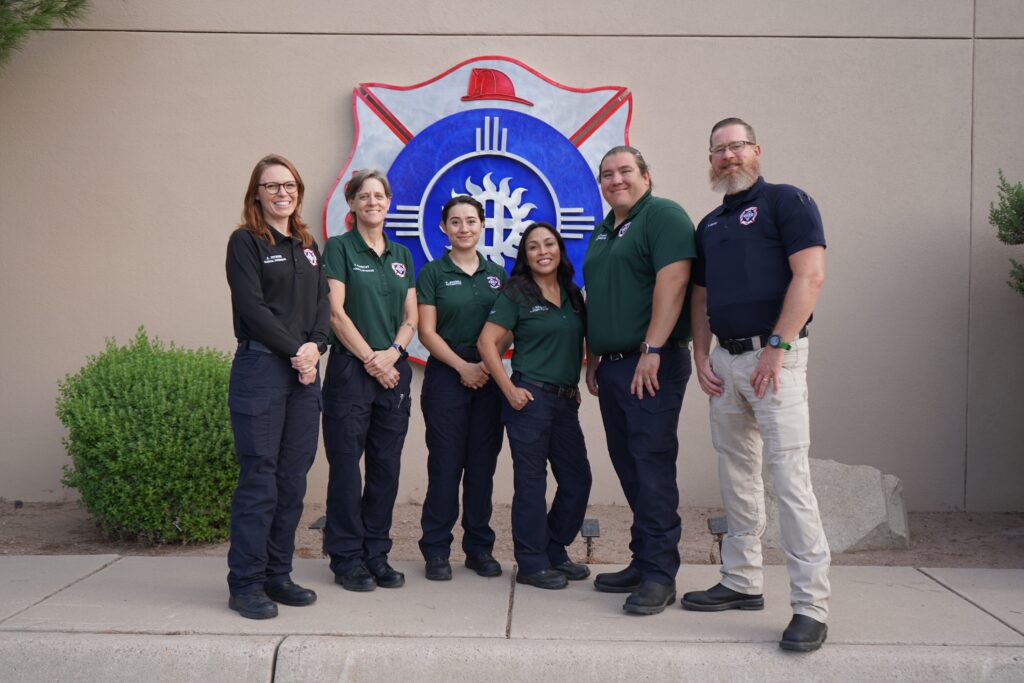
Each team pairs a firefighter-paramedic with a social worker, combining medical and behavioral health expertise. The team can assess a resident’s needs, de-escalate a crisis, develop a safety plan, and connect the resident with appropriate care.
Key findings
- More residents received care at the scene: The LIGHT team helped 65 residents—37.8% of its cases—safely remain at the scene with a care or safety plan. Traditional EMS records showed no cases in this outcome category.
- Fewer cases resulted in emergency department visits: Emergency department visits occurred in 22.7% of LIGHT cases, compared with 69.7% of cases handled by traditional EMS units.
- More residents went directly to behavioral health care: About 31.9% of LIGHT cases resulted in direct transport to an appropriate behavioral health facility, compared with 11.5% of cases handled by traditional EMS units.
- Fewer cases ended without a planned care connection: Refusals of care, departures against medical advice, and transfers to police custody occurred in 7.6% of LIGHT cases, compared with 18.8% of cases handled by traditional EMS units.
The findings suggest that pairing behavioral health and medical professionals can help residents receive care in a setting suited to their needs. The approach also may help preserve emergency department capacity and keep traditional EMS crews available for other urgent calls.
“The City’s LIGHT Program is a unique service that is designed around meeting our citizens where they are at and caring for their needs in a more deliberate and effective manner. When someone is in crisis or needs someone to talk to after the loss of a loved one, our teams are uniquely positioned to provide that support. We are extremely proud of this program and the impact it is having on the wellbeing of our community,” said Fire Chief Michael Daniels.
The City launched LIGHT in March 2023 to help stabilize residents experiencing behavioral health crises. Dispatched through the 911 system, the team responds to behavioral health crises, suicide attempts, reports of suicidal thoughts, overdoses, CPR calls, and calls involving a death. Depending on a resident’s needs, LIGHT can provide care at the scene or transport the resident to an appropriate behavioral health facility.
The review compared actual emergency calls rather than randomly assigned cases. Differences in unit availability, dispatch practices, and call circumstances may have affected the results. In addition, the nine-month review did not track long-term outcomes. The findings therefore show an association between the response model and where residents received care; they do not establish that the response model caused those outcomes.
The Las Cruces Fire Department will use the findings to inform program improvements, training, and future planning.
Las Cruces Youth Council
Apodaca/Lift Up Area MRA Input

Minimum Wage Notice for 2027

2026 GO Bond Question

City Invites Feedback on Draft Strategic Plan
FAQs Live
Transportation Safety Action Plan
Police Auditor Meeting July 27

LCU Warns About Possible Water Quality Scam